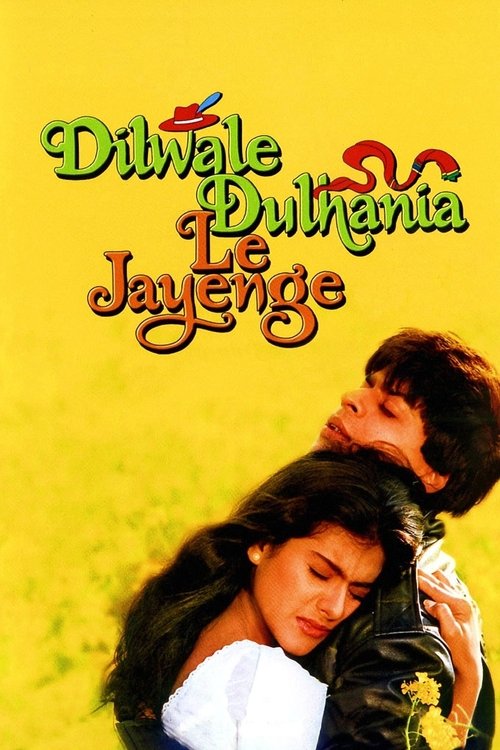
Dilwale Dulhania Le Jayenge
Raj is a rich, carefree, happy-go-lucky second generation NRI. Simran is the daughter of Chaudhary Baldev Singh, who in spite of being an NRI is very strict about adherence to Indian values. Simran has left for India to be married to her childhood fiancé. Raj leaves for India with a mission at his hands, to claim his lady love under the noses of her whole family. Thus begins a saga.






Where to watch


EPISODENEW.COM Review
Aditya Chopra’s *Dilwale Dulhania Le Jayenge*, a 1995 phenomenon, isn't merely a romantic comedy; it’s a meticulously crafted cultural artifact, a cornerstone of modern Indian cinema that skillfully navigates the turbulent waters of tradition versus modernity. What initially appears as a lighthearted tale of NRI romance, with Shah Rukh Khan’s Raj as the quintessential charming rogue and Kajol’s Simran as the dutiful daughter, quickly reveals its deeper ambitions.
Chopra's direction, while frequently opting for broad strokes in its comedic sequences, demonstrates a surprising precision in its emotional beats. The camera often frames Simran, particularly in the European leg of the narrative, with a sense of burgeoning liberation, contrasting sharply with the more constrained, almost claustrophobic compositions once she returns to her father’s domain. This visual dichotomy brilliantly underscores her internal conflict. Raj’s performance, often criticized as overly theatrical, is in fact a deliberate embodiment of a certain youthful, almost childlike rebellion against rigid societal norms. His charm isn’t just surface-level; it’s a weapon, disarming both the audience and, eventually, Simran’s family.
Yet, for all its strengths, the film’s narrative structure, particularly its extended climax, occasionally strains credulity. The repeated confrontations and near-misses, while building tension, can sometimes feel like a protracted exercise in delaying the inevitable, rather than organically deepening the characters’ struggles. Amrish Puri, as the patriarchal Baldev Singh, delivers a performance of nuanced sternness, his internal battle between love for his daughter and adherence to his principles being the film's true dramatic anchor. His eventual capitulation, while satisfying, feels somewhat rushed, a convenient resolution to an otherwise meticulously built conflict.
Ultimately, *Dilwale Dulhania Le Jayenge* triumphs not just as a love story, but as a cultural commentary on identity, family, and the enduring power of personal conviction. It’s a film that demands to be seen not just as entertainment, but as a rich tapestry woven with threads of aspiration and tradition, still resonating decades later.