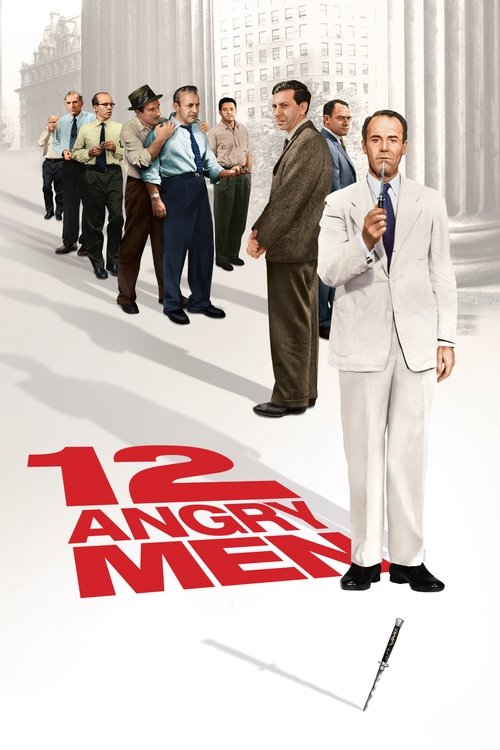
12 Angry Men
The defense and the prosecution have rested and the jury is filing into the jury room to decide if a young Spanish-American is guilty or innocent of murdering his father. What begins as an open and shut case soon becomes a mini-drama of each of the jurors’ prejudices and preconceptions about the trial, the accused, and each other.
Where to watch


EPISODENEW.COM Review
Sidney Lumet’s 1957 masterpiece, *12 Angry Men*, isn’t merely a courtroom drama; it's a claustrophobic crucible where the very essence of justice is forged and tested under immense pressure. This film, confined almost entirely to a single, sweltering jury room, transcends its minimalist setting to offer a profound meditation on human nature, prejudice, and the arduous path to truth.
Lumet’s directorial genius is immediately apparent in his masterful manipulation of space. The initial wide shots of the jury room subtly establish a sense of shared, albeit comfortable, confinement. As the narrative progresses and tensions escalate, the camera tightens, moving to increasingly intimate close-ups. This deliberate visual constriction mirrors the psychological pressure mounting on the jurors, making the viewer feel every bead of sweat and every simmering frustration. The screenplay, by Reginald Rose, is a marvel of economy and escalating tension. Each line, each interruption, each silence, serves to peel back layers of assumption and reveal the raw, often ugly, prejudices lurking beneath civility. It's a ballet of dialogue, where arguments are not just stated, but performed, with meticulous precision.
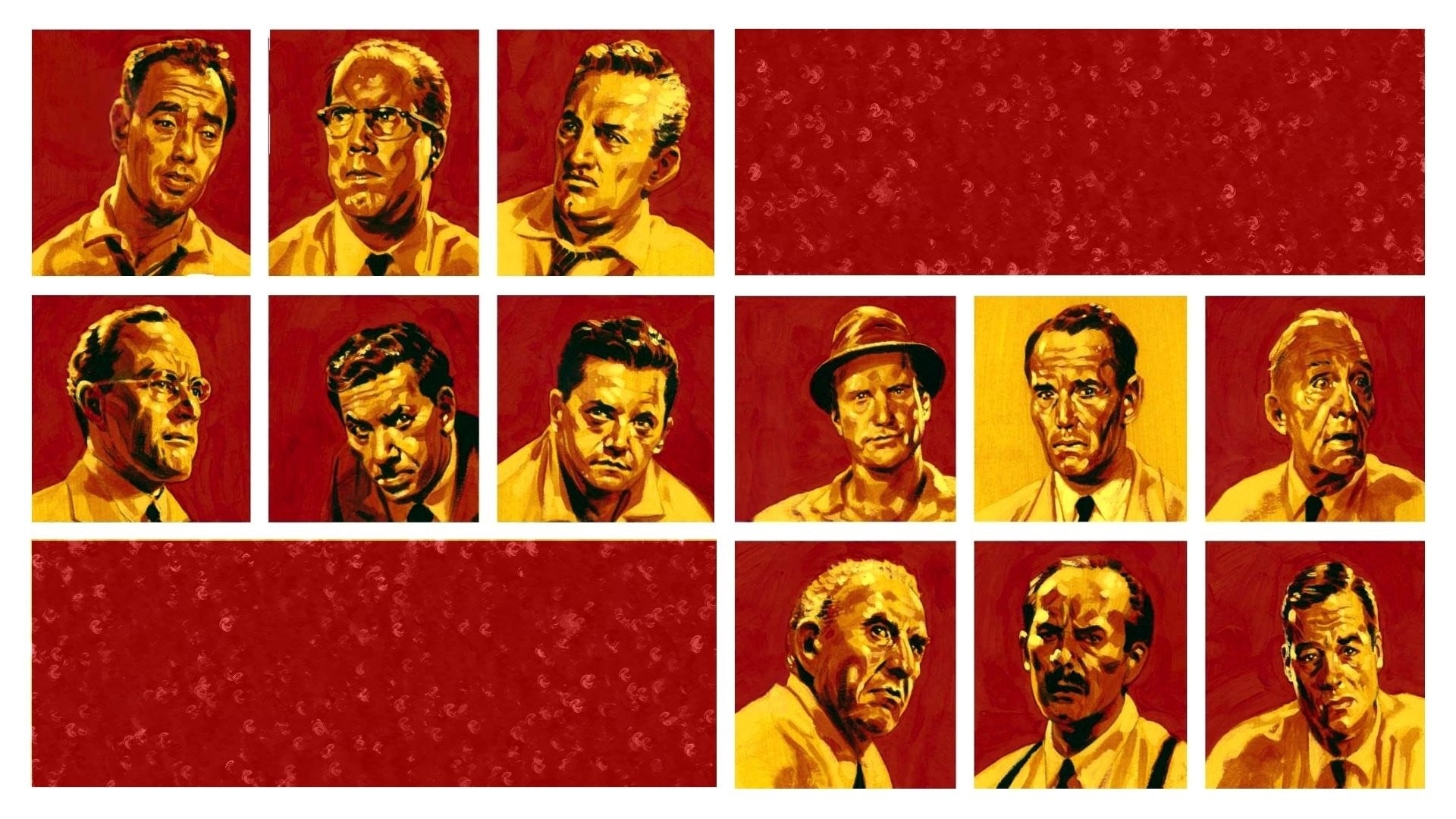
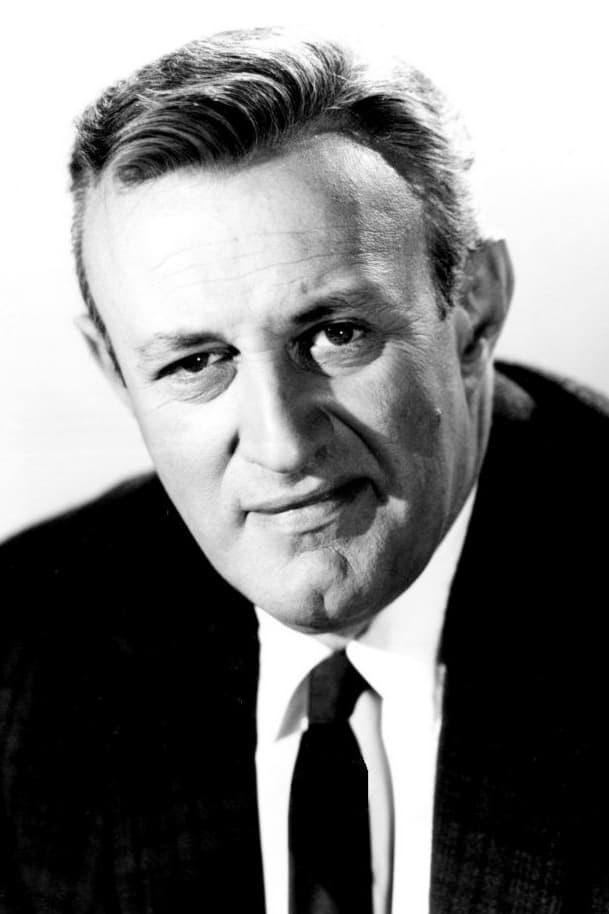
The ensemble cast is phenomenal, a true testament to Lumet's ability to extract nuanced performances. Henry Fonda, as Juror 8, is the quiet, unwavering conscience, his subtle shifts in expression conveying more than pages of dialogue. His performance isn't about grandstanding; it's about persistent, methodical questioning. Conversely, Lee J. Cobb’s Juror 3 is a volcanic eruption of personal baggage, his anger a visceral, terrifying force. His character is a stark reminder that justice is often obstructed not by malice, but by unresolved personal pain. The film's strength lies in these contrasting dynamics, where archetypes clash and evolve.
However, the film, while brilliant, occasionally leans into a somewhat idealized view of rationality triumphing over emotion. While powerful, the gradual conversion of all jurors to reasonable doubt, particularly some of the more entrenched bigots, feels, at times, a touch too neat for the messy realities of human conviction. It’s a necessary cinematic conceit to deliver its message, but one that perhaps oversimplifies the stubbornness of ingrained bias. Despite this slight narrative neatness, *12 Angry Men* remains an indispensable work. It's a powerful argument for the painstaking process of deliberation, a stark warning against the dangers of snap judgments, and a timeless exploration of what it truly means to be innocent until proven guilty. It challenges us to look beyond the surface, to question our own biases, and to understand that true justice is rarely convenient.